

Air and vapor barrier installation
Air & Vapor Barriers
Continuous air and water-resistive barriers that keep wall assemblies dry, meet the energy code and are ready for cladding on schedule.
Overview
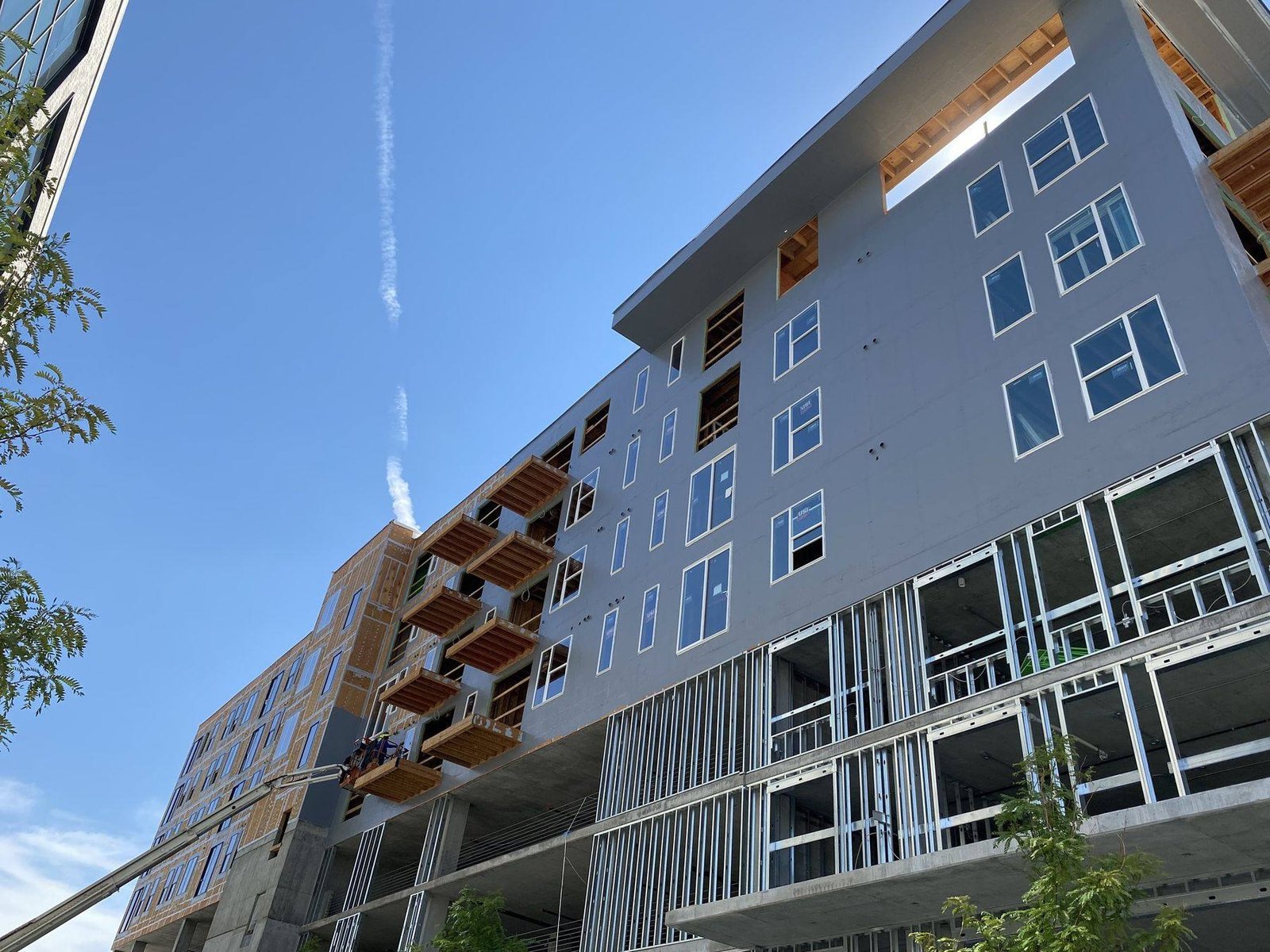
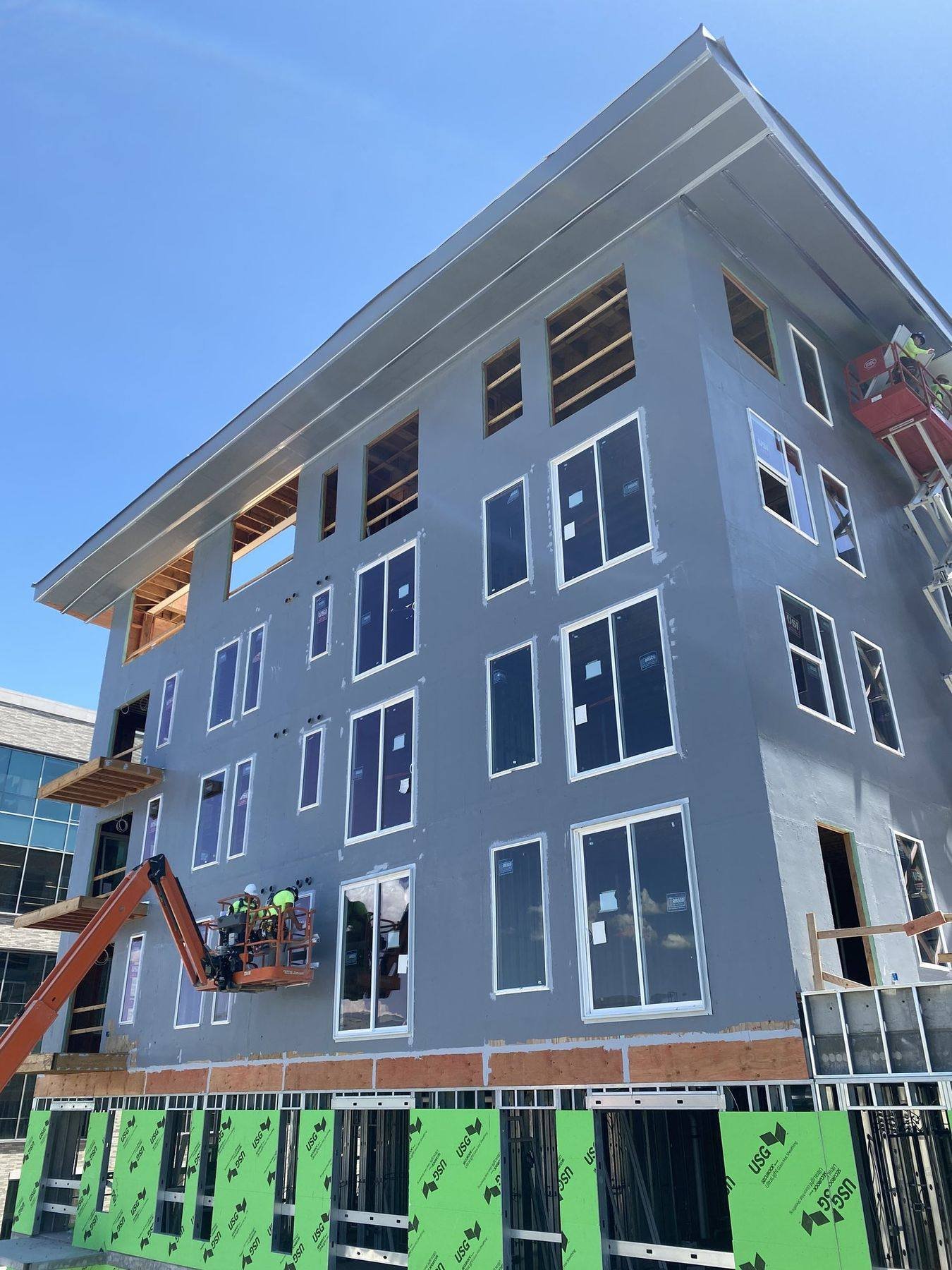
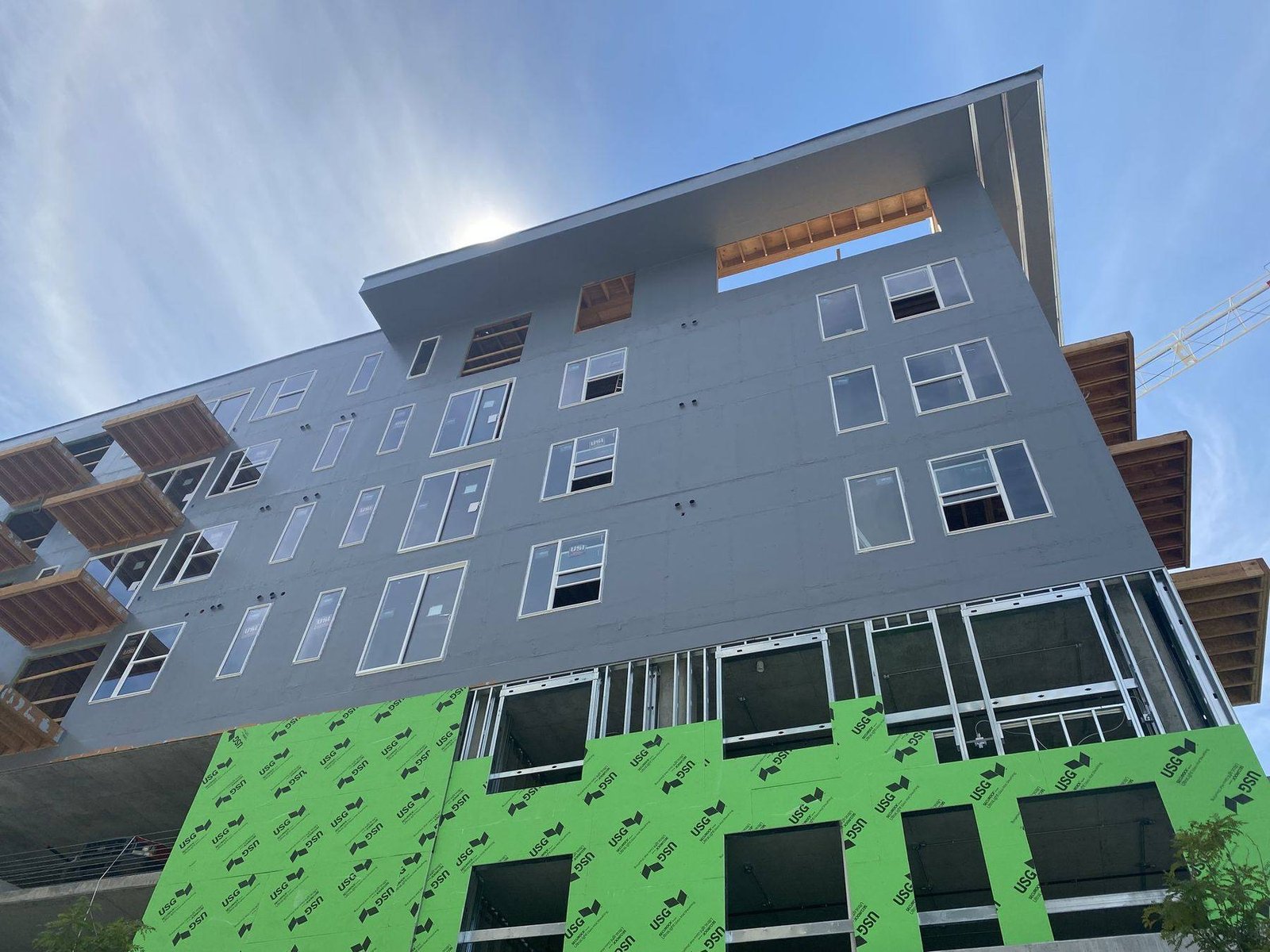
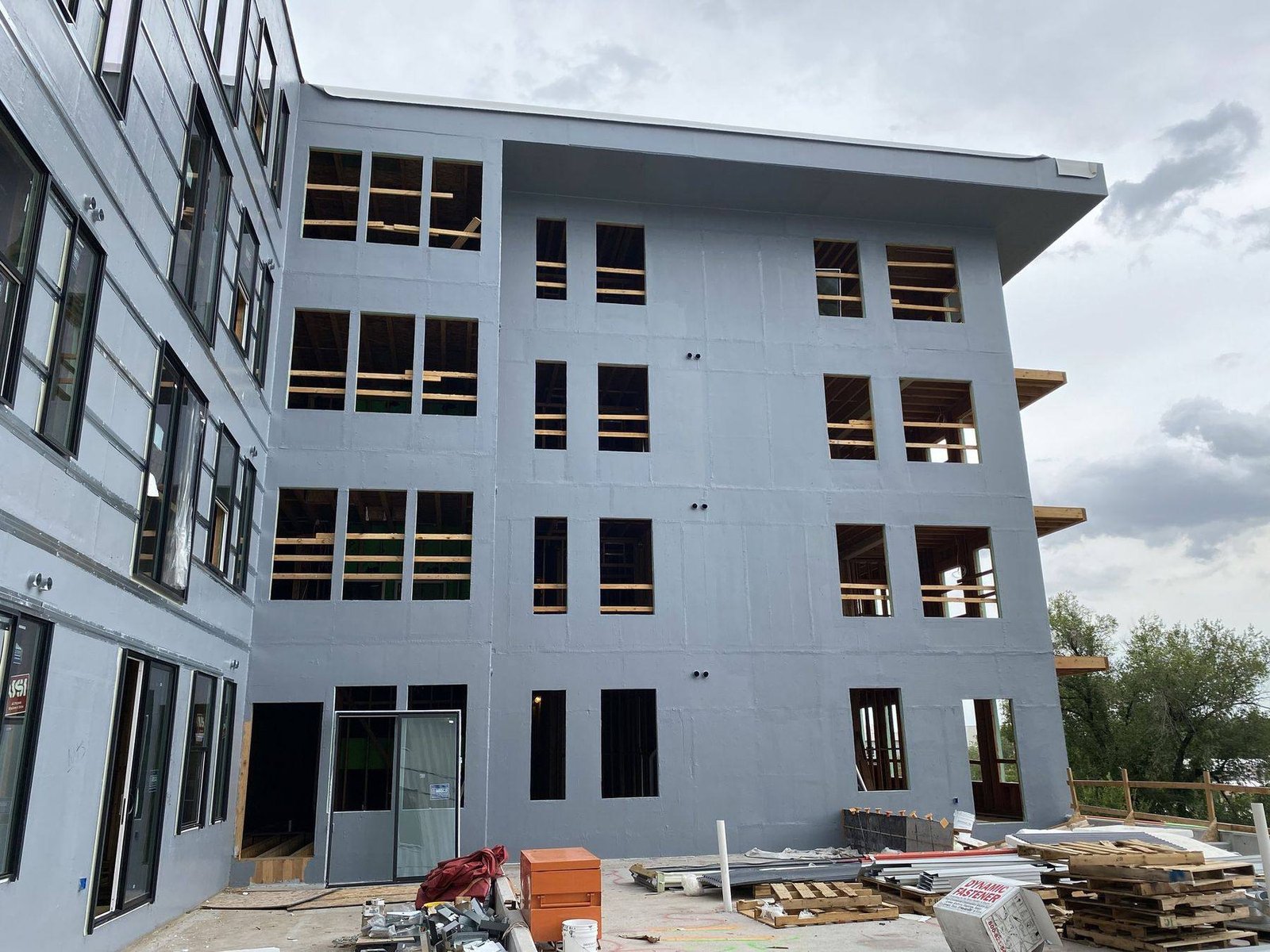
An air barrier controls air leakage through the building envelope, which drives most condensation problems inside walls and a large share of heating and cooling loss. GXS installs fluid-applied and self-adhered systems on sheathing, CMU and concrete, from the podium to the parapet.
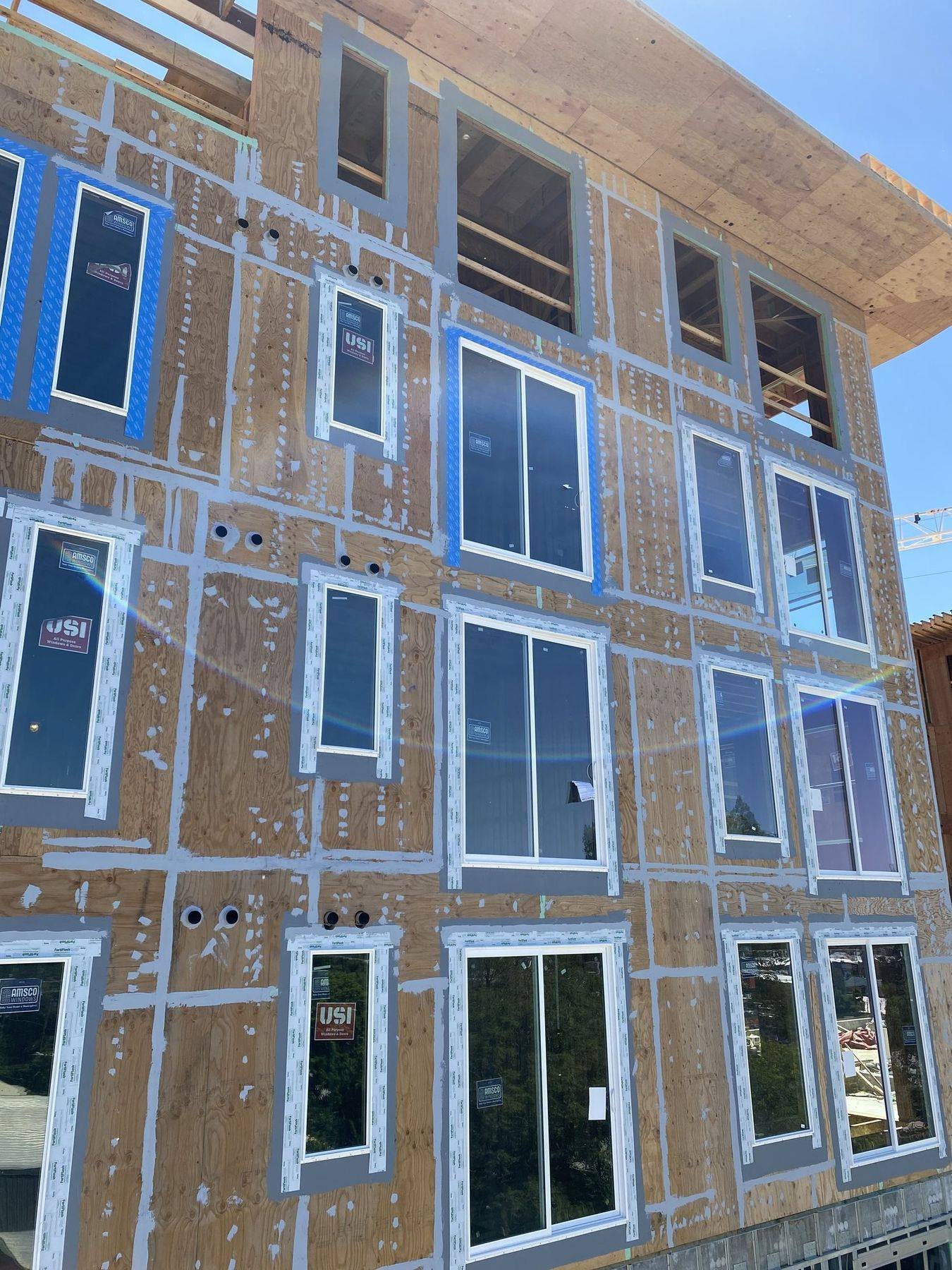
The membrane is the easy part. The work that matters is at rough openings, slab edges, penetrations and the transitions to the roof and the foundation, and that is where our crews spend their time.
Where we install it
- Multifamily wood frame
- Podium buildings
- Steel stud and sheathing
- CMU and concrete walls
- Commercial and office
- Schools and public buildings
What’s included
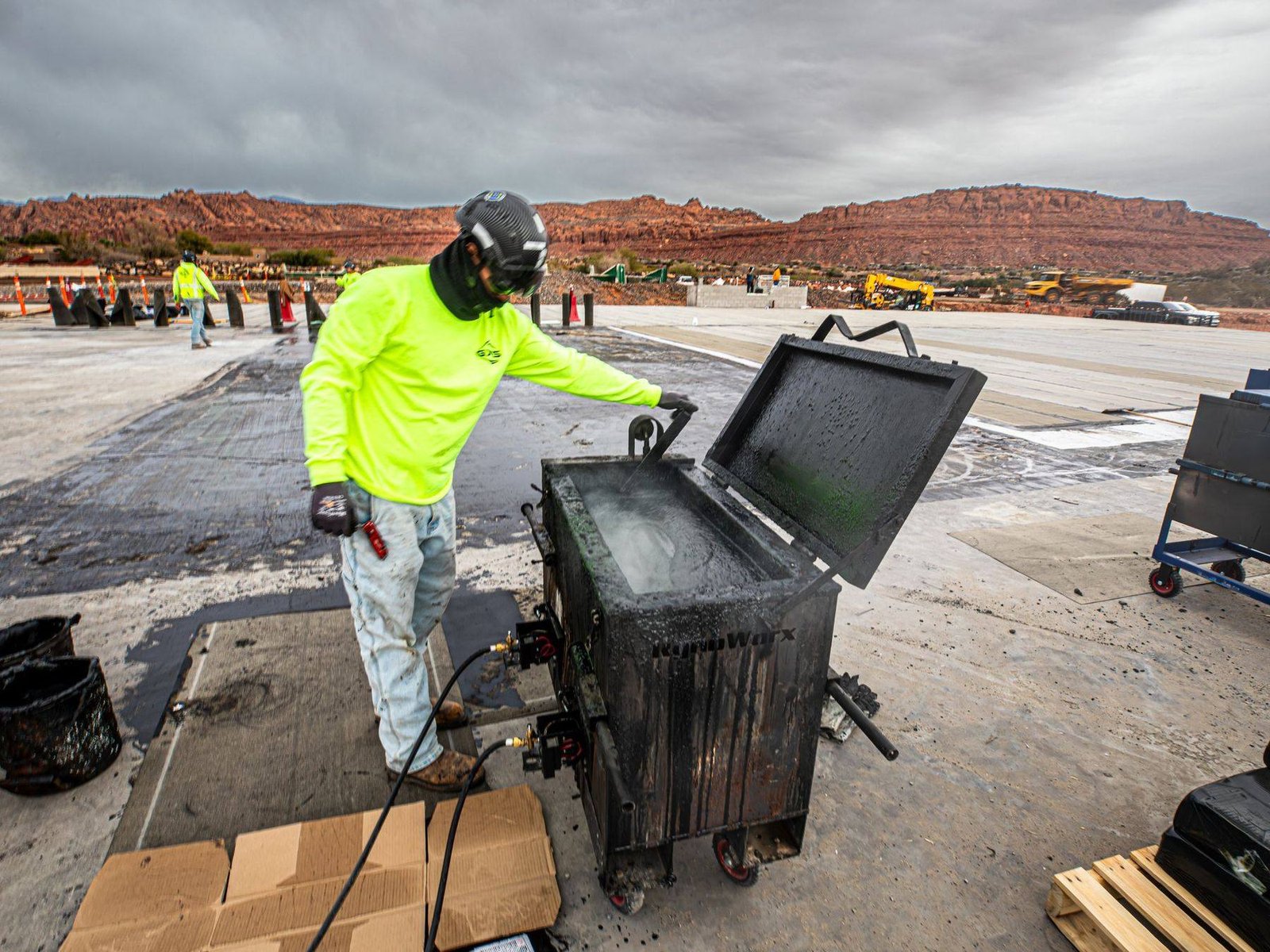
- Fluid-applied air and water-resistive barriers
- Self-adhered sheet membranes
- Vapor-permeable or vapor-retarder systems to suit the wall design
- Rough opening and window flashing
- Transitions to roofing, foundation waterproofing and storefront
- Penetration and slab-edge detailing
- Mock-ups and field adhesion testing when specified
- Sequencing with cladding and window trades

FAQ
Air & Vapor Barriers: common questions
Is an air barrier required by code in Utah?
The commercial energy code requires a continuous air barrier on most new commercial buildings in Utah’s climate zones, and many multifamily projects are designed with one as well. The drawings and specifications set the system and any testing requirements.
What is the difference between an air barrier and a vapor barrier?
An air barrier stops air moving through the wall. A vapor barrier, or vapor retarder, slows the diffusion of water vapor. Many air barriers are vapor permeable on purpose so the wall can dry; the right choice depends on the wall assembly.
Fluid-applied or sheet membrane: which is better?
Both perform when they are detailed correctly. Fluid-applied systems are fast on large, complex walls and have no laps; sheet membranes give a consistent thickness and are easy to inspect. We recommend one based on the substrate, the schedule and the specification.
How long can an air barrier stay exposed before cladding?
Each product has a maximum UV exposure time, usually measured in weeks to months. We schedule the installation with the cladding sequence so the membrane is covered within the manufacturer’s limit.
Get air & vapor barriers priced.
Send drawings, specs or a few photos. Our estimating team replies within one business day.