

Why Utah Parking Structures Need Traffic Coatings
Freeze-thaw cycles and deicing salts are hard on Utah parking decks. How traffic coatings protect the concrete and rebar, and when a deck needs one.
Traffic and deck coatings
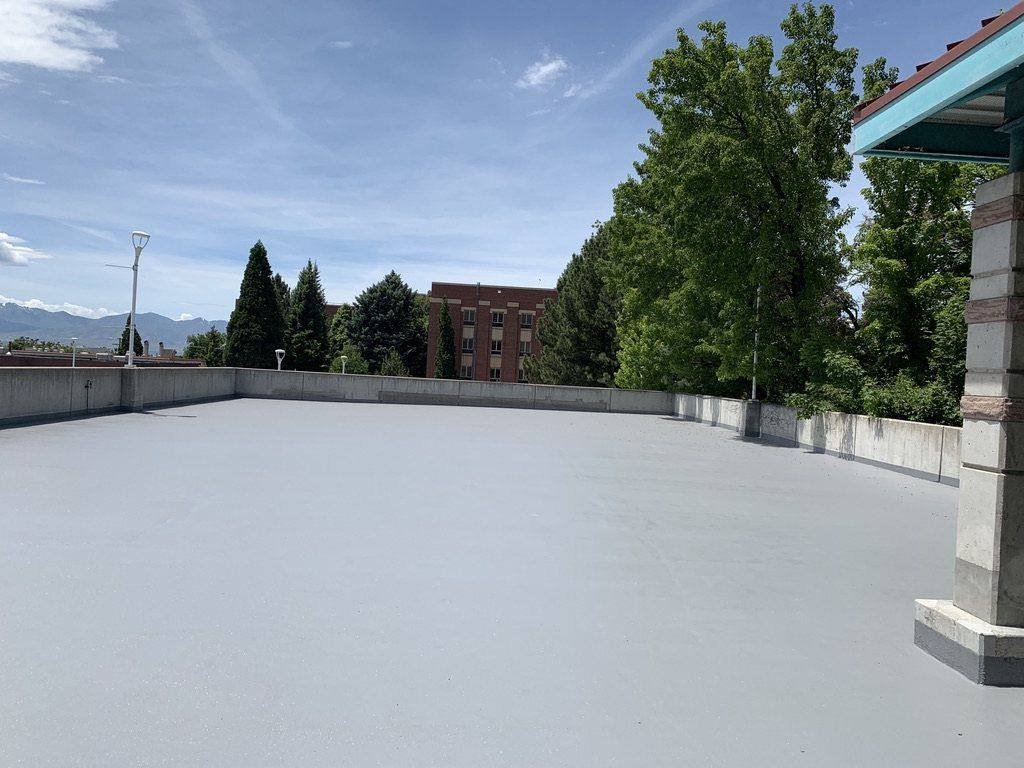
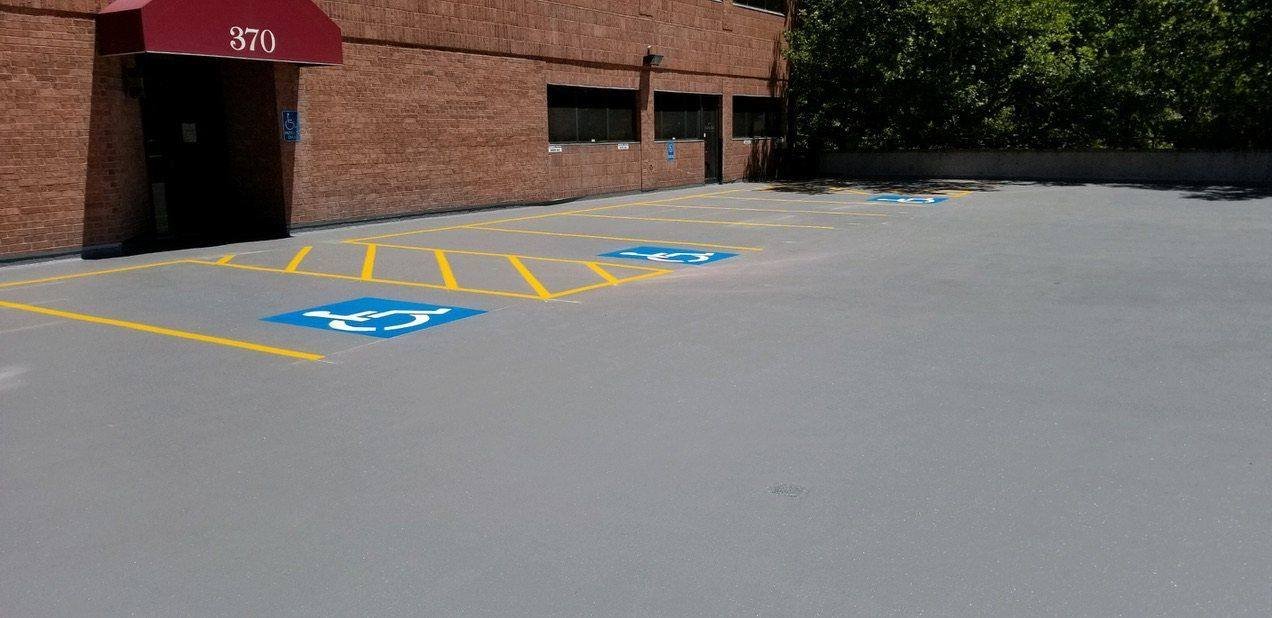
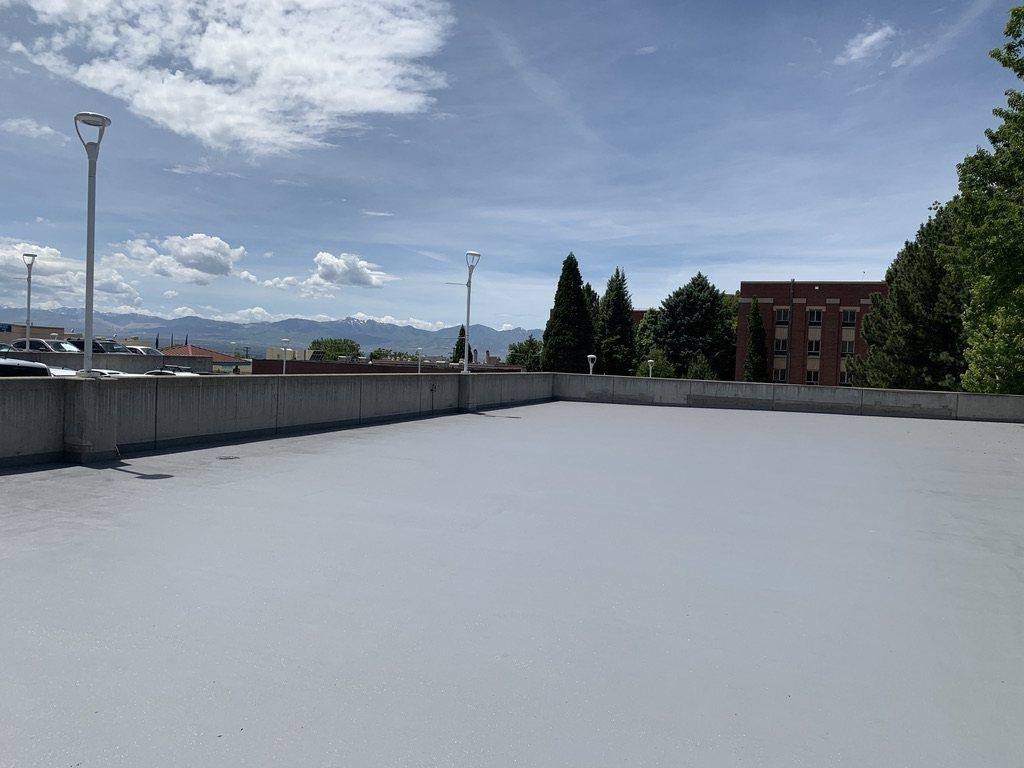
Traffic-bearing membranes that waterproof the deck, protect the reinforcing steel from deicing salts and stand up to tires, plows and freeze-thaw.
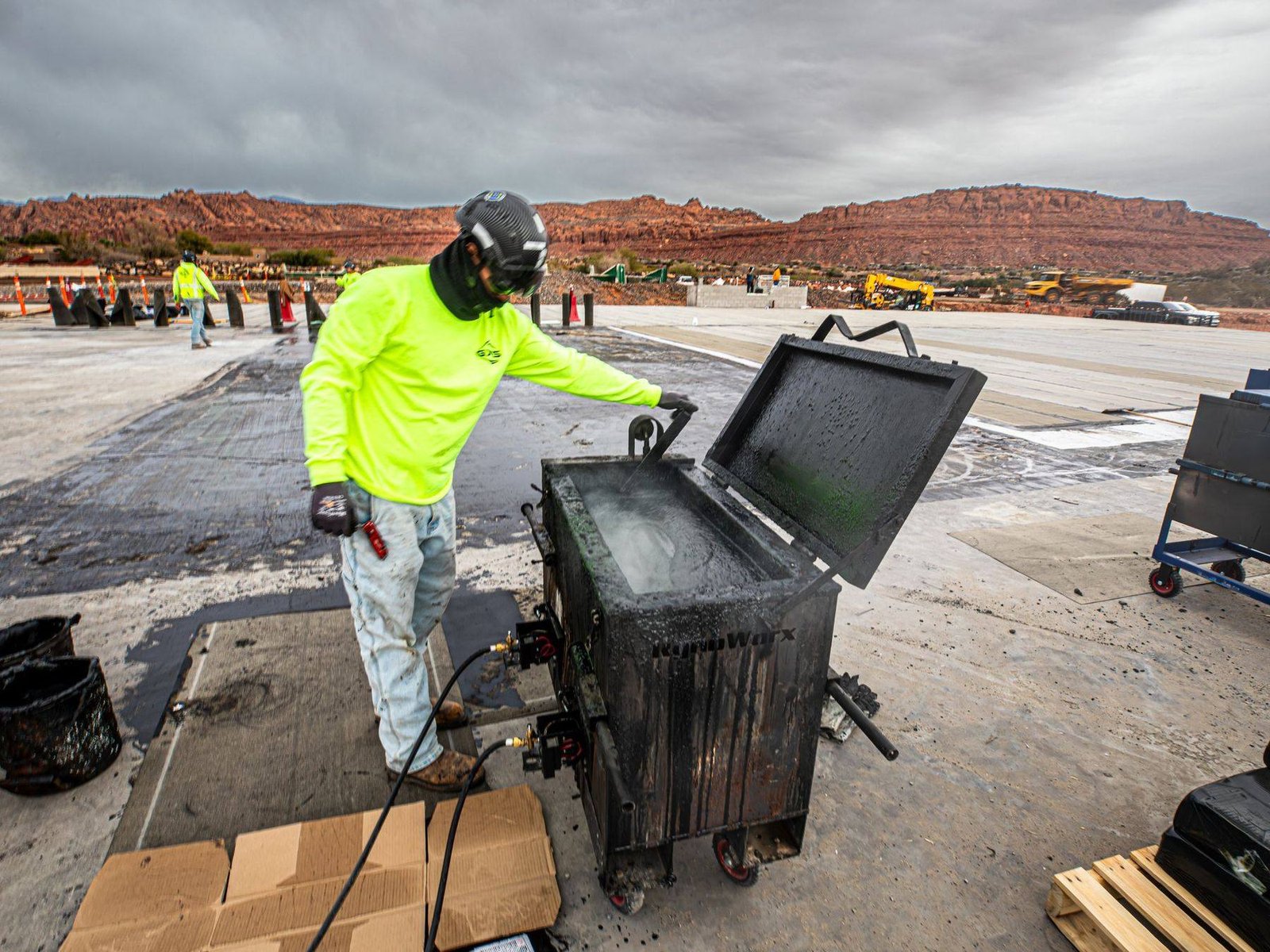
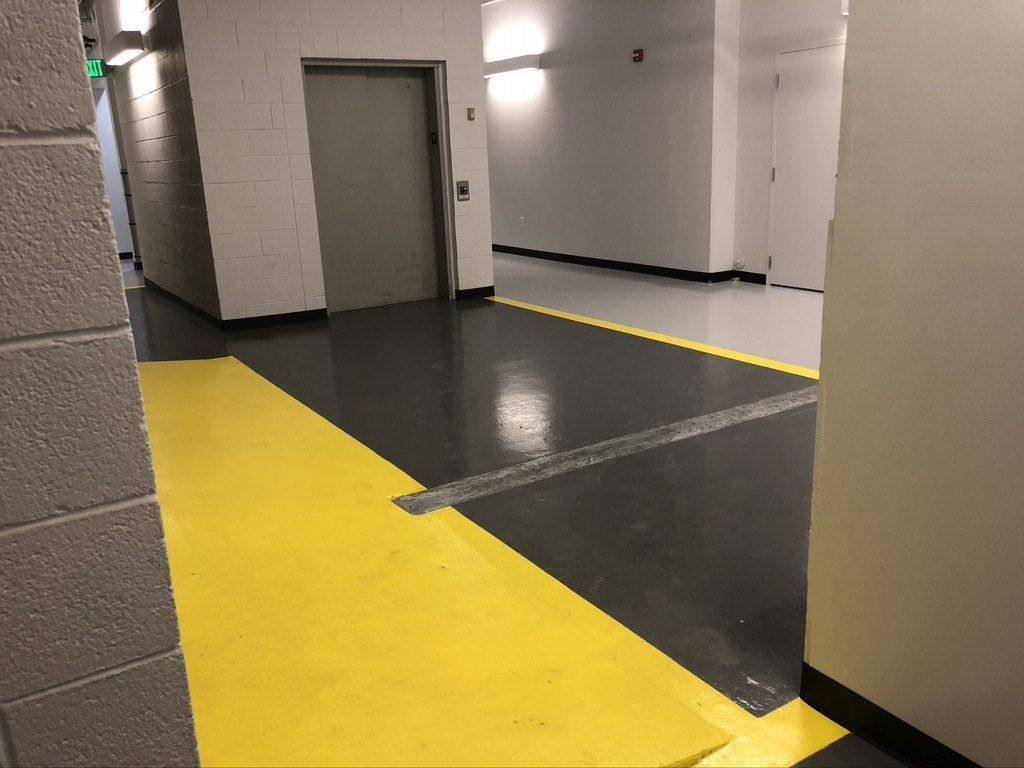
Water and chlorides from deicing salts are what shorten the life of a parking deck. A traffic coating seals the slab against both and gives a skid-resistant wearing surface. GXS installs traffic coatings on new decks and recoats existing structures that stay in service.
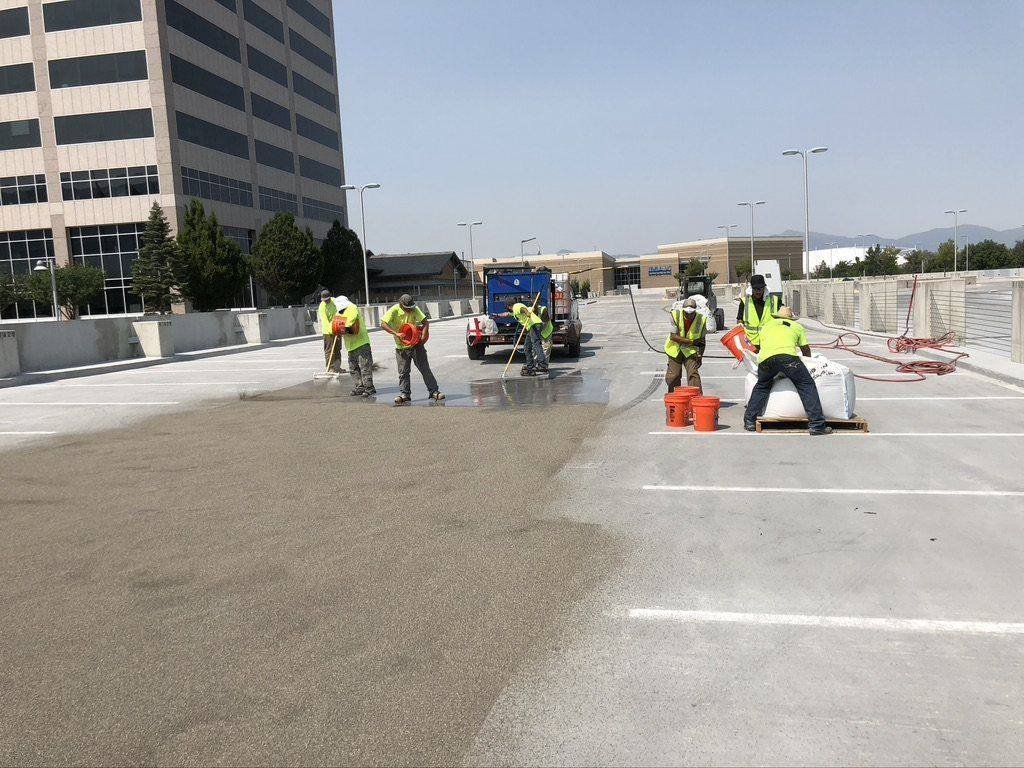
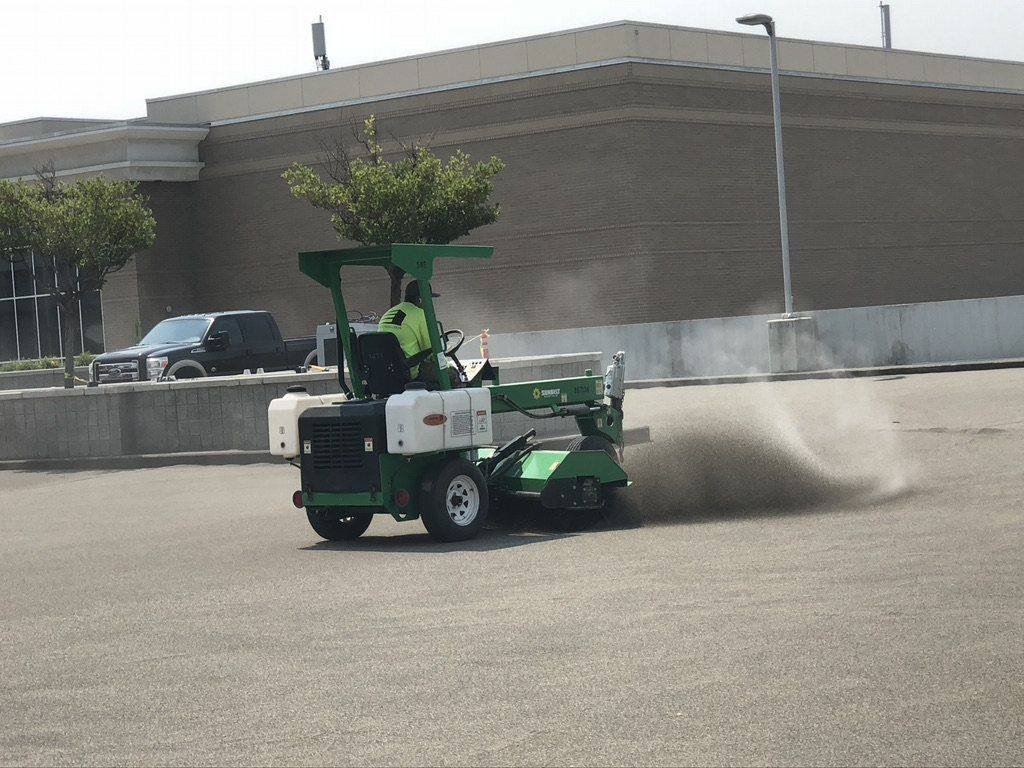
Surface preparation decides how long a coating lasts. We shot blast or grind to the profile the manufacturer requires, repair cracks and joints, then apply the system in sections so the structure can stay open.
Where we install it
FAQ
With proper preparation, wear areas typically need a new top coat every several years, while the base membrane lasts much longer. Ramps, turning lanes and entrances wear first; recoating those areas on time extends the life of the whole system.
Usually yes. We phase the work by level or by section, coordinate closures with the owner and use fast-curing systems where downtime has to be short.
Cracks are routed and sealed before coating, and the membrane bridges small movement. Delamination, spalls and structural cracks need concrete repair first; our sister company DD Reconstruction handles that work.
A penetrating sealer reduces water and chloride absorption but does not bridge cracks. A traffic coating is a continuous elastomeric membrane with a wearing surface, used over occupied space, on ramps and in high-exposure areas.
Need concrete repair, tilt-up or new concrete? Our sister company handles concrete work: DD Reconstruction
Send drawings, specs or a few photos. Our estimating team replies within one business day.