

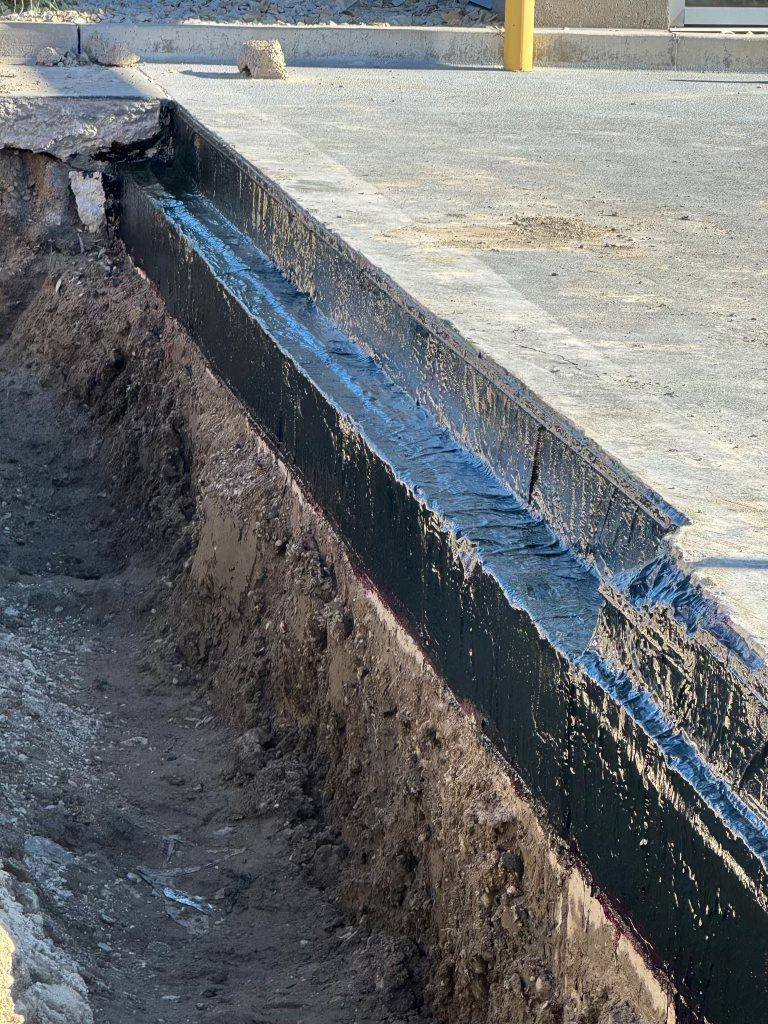
Waterproofing vs. Dampproofing Below Grade in Utah
Dampproofing and waterproofing are not interchangeable. How to tell which one a Utah foundation needs, and where below-grade systems usually fail.
Traffic coatings
Freeze-thaw cycles and deicing salts are hard on Utah parking decks. How traffic coatings protect the concrete and rebar, and when a deck needs one.
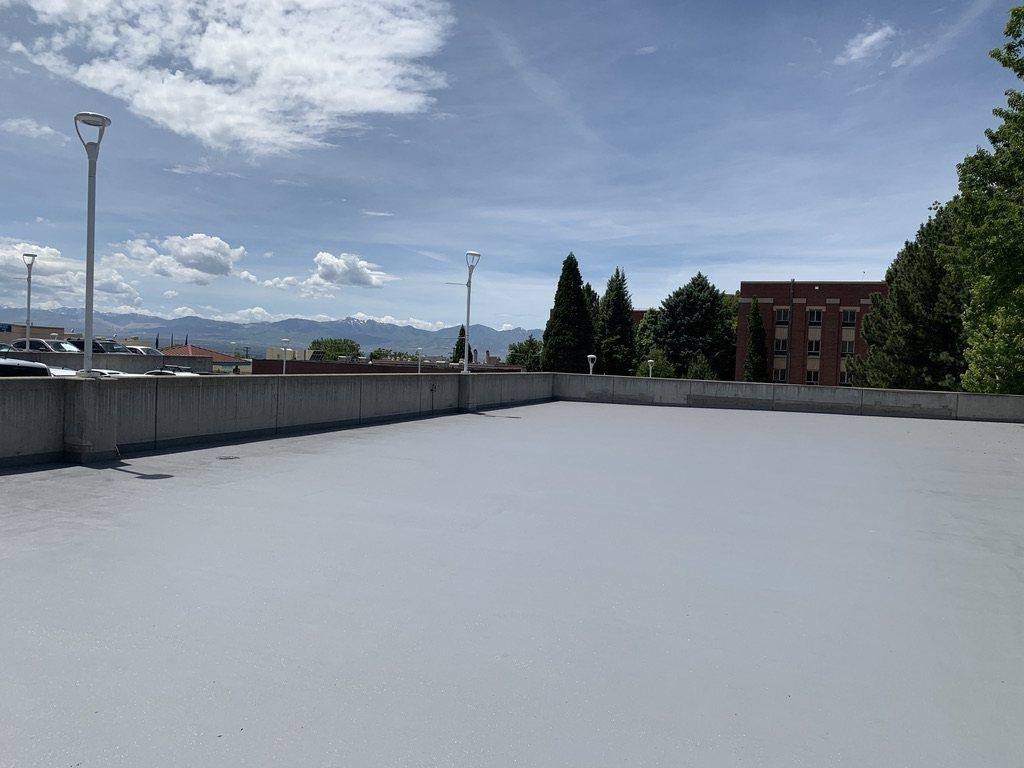
Every winter, Utah parking structures take a beating that most people never see. Vehicles drive in carrying snow and slush loaded with deicing salt. The salt water sits on the deck, soaks into the concrete, and freezes and thaws dozens of times a season. The visible damage — spalls, rust stains, leaks onto the cars below — shows up years later, after the real damage has already happened inside the slab.
A traffic coating is designed to stop that process before it starts.
A traffic coating is a waterproofing membrane with a wear surface built into it. A typical vehicular system includes:
Polyurethane, epoxy and methyl methacrylate (MMA) chemistries are all used. The right one depends on the traffic, the temperature during installation, and how quickly the deck must reopen.
Concrete is porous. On an uncoated deck, water carries chlorides from deicing salts down into the slab. When enough chloride reaches the reinforcing steel, it breaks down the protective layer that normally keeps the steel from corroding.
Corroding steel expands. As the rust takes up more space than the original steel, it cracks the concrete around it from the inside. The result is delamination (a hollow layer you can hear when you drag a chain across the deck), spalling (pieces that break away), rust staining, and leaks through to the level below.
Freeze-thaw cycling makes it worse. Water in the concrete expands when it freezes, opening cracks that let in more water and more salt the next time.
See it in section
01 / 06
Deicing salt dissolves in snowmelt and soaks into cracks, carrying chlorides down to the reinforcing steel.
02 / 06 GXS
Shot blasting removes contaminants and opens the concrete so the membrane can bond.
03 / 06 GXS
Cracks are routed and sealed, and damaged concrete is repaired before any coating goes on.
04 / 06 GXS
A primer and an elastomeric base coat form the waterproof layer and bridge hairline cracks.
05 / 06 GXS
An intermediate coat broadcast with aggregate takes the abrasion of tires and adds traction.
06 / 06 GXS
A UV-stable top coat seals the system. Salt water now stays on top and drains away.
If you are seeing rust stains or spalls, the damage has likely reached the steel. That calls for concrete repair before coating; our sister company DD Reconstruction handles structural concrete and parking structure repair.
Not every area of a garage sees the same wear:
A well-specified project uses heavier builds where the traffic is heaviest instead of one system everywhere.
Owners rarely can close a parking structure for weeks. Work is typically phased by bay or level, with traffic control and signage, so the structure stays partly in service. Fast-cure systems can shorten the closure of each area significantly. Cold-weather installation is possible with the right chemistry, but most coating work in Utah is scheduled for late spring through early fall.
A traffic coating is a wearing surface; it is meant to be maintained. An annual inspection after winter — looking for worn areas, damaged top coat, cracks and joint failures — lets an owner recoat the wear surface before the waterproofing layer underneath is exposed. Recoating the top layers is far less expensive than replacing the full system, and much less expensive than repairing corroded concrete.
In Utah’s climate, an uncoated parking deck is exposed to exactly the conditions that drive reinforcing steel corrosion: water, chlorides and freeze-thaw. A traffic coating keeps salt water out of the slab and adds years to the structure’s life.
GXS installs vehicular and pedestrian traffic coatings and expansion joints on parking structures across Utah. Request a site assessment and we will survey the deck and recommend a system.
Inspect it every year, after winter. Wear and top coats in drive aisles, ramps and turning areas typically need recoating first; recoating on schedule is much less expensive than replacing the full system.
Yes, but the concrete must be repaired first. Cracks are routed and sealed, and spalled or delaminated concrete is removed and patched before the membrane goes on.
Usually not completely. Work is phased by bay or level so parts of the structure stay open, and fast-cure systems shorten each closure.
Questions about a project? Call (801) 707-4205 or email bids@guaranteedxs.com.
Send drawings, specs or a few photos. Our estimating team replies within one business day.